Art in Bloom MFA May 1-3 2026
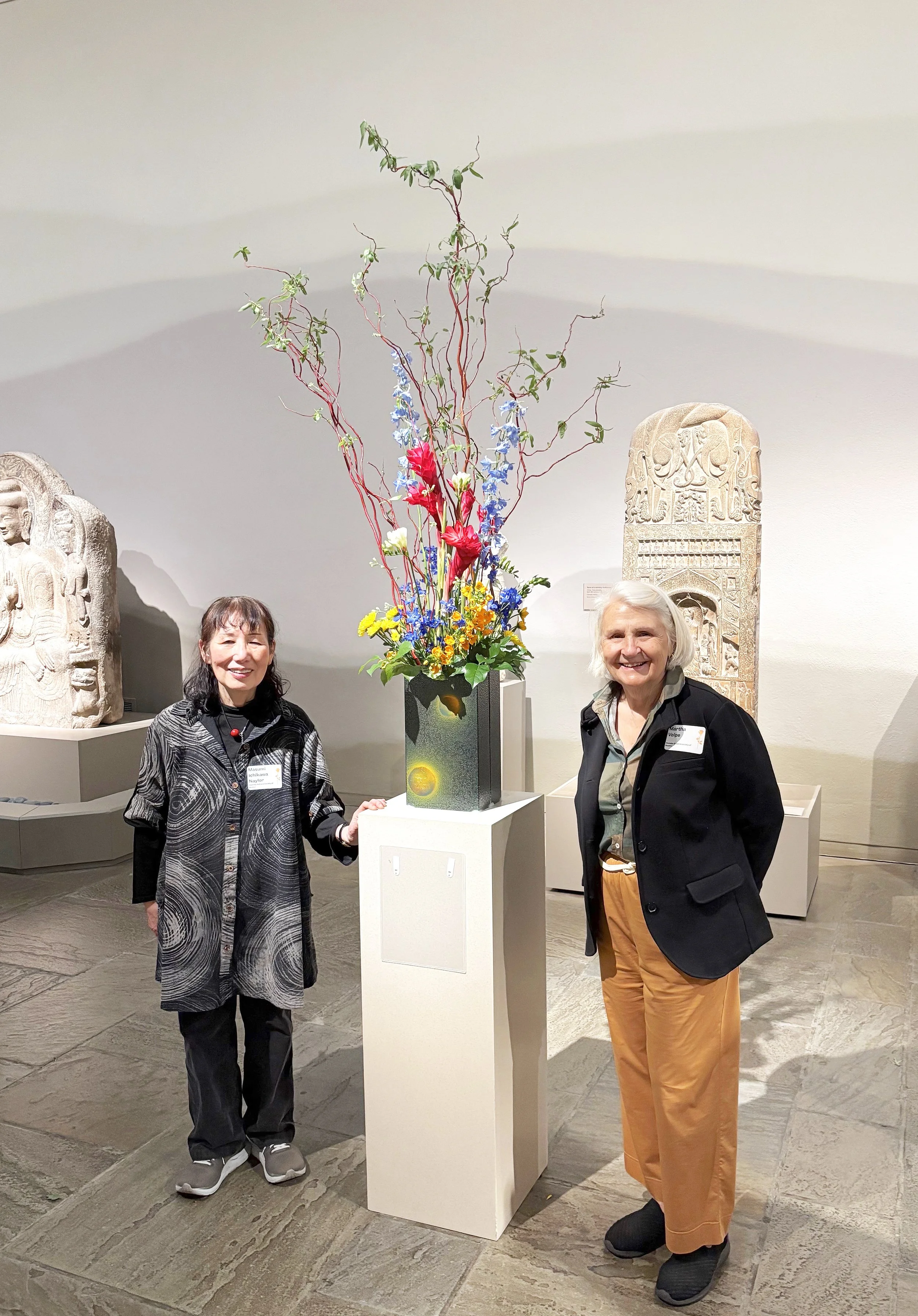
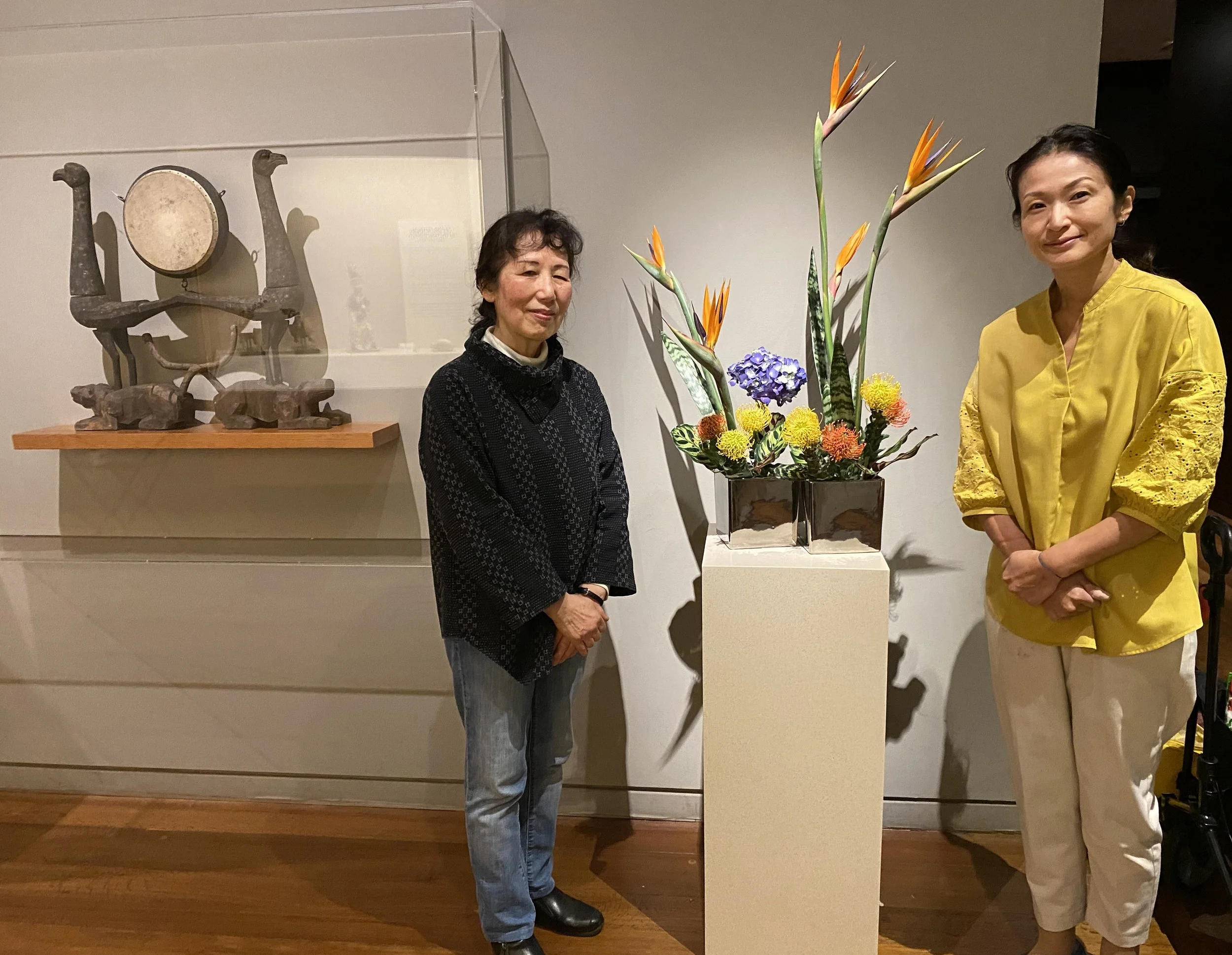
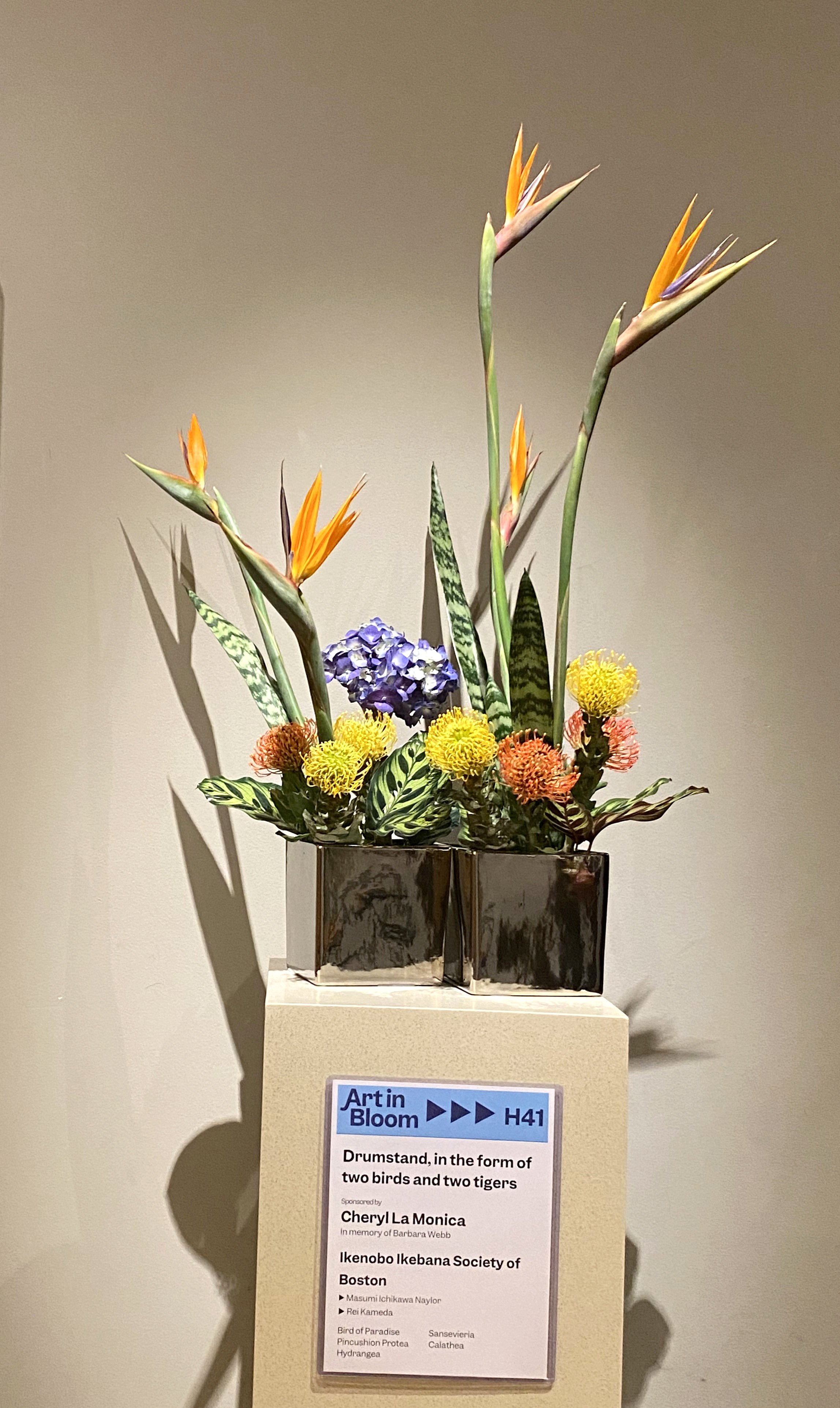
Martha Volpe and Masumi Ichikawa Naylor
represented our society with this wonderful arrangement. The MFA used a QR code next to each arrangement with the designers’ thoughts and comments. Here is what they wrote:
The initial impression we had of the ancient Buddhist votive stele was one of mystery. Looking at this artwork, one can feel the passionate prayers of the people. We were struck and a bit overwhelmed by the incredible detail of the writing, ornamentation, and sculpture carved in relief on this large work. There is so much content to take in when looking at the stone. Each section of the stele offers a huge amount of information
Because our arrangement would be displayed in this large room with high ceilings, we chose a tall, stable vase. Our main concern was choosing a vase that would be harmonious with the flowers and design.
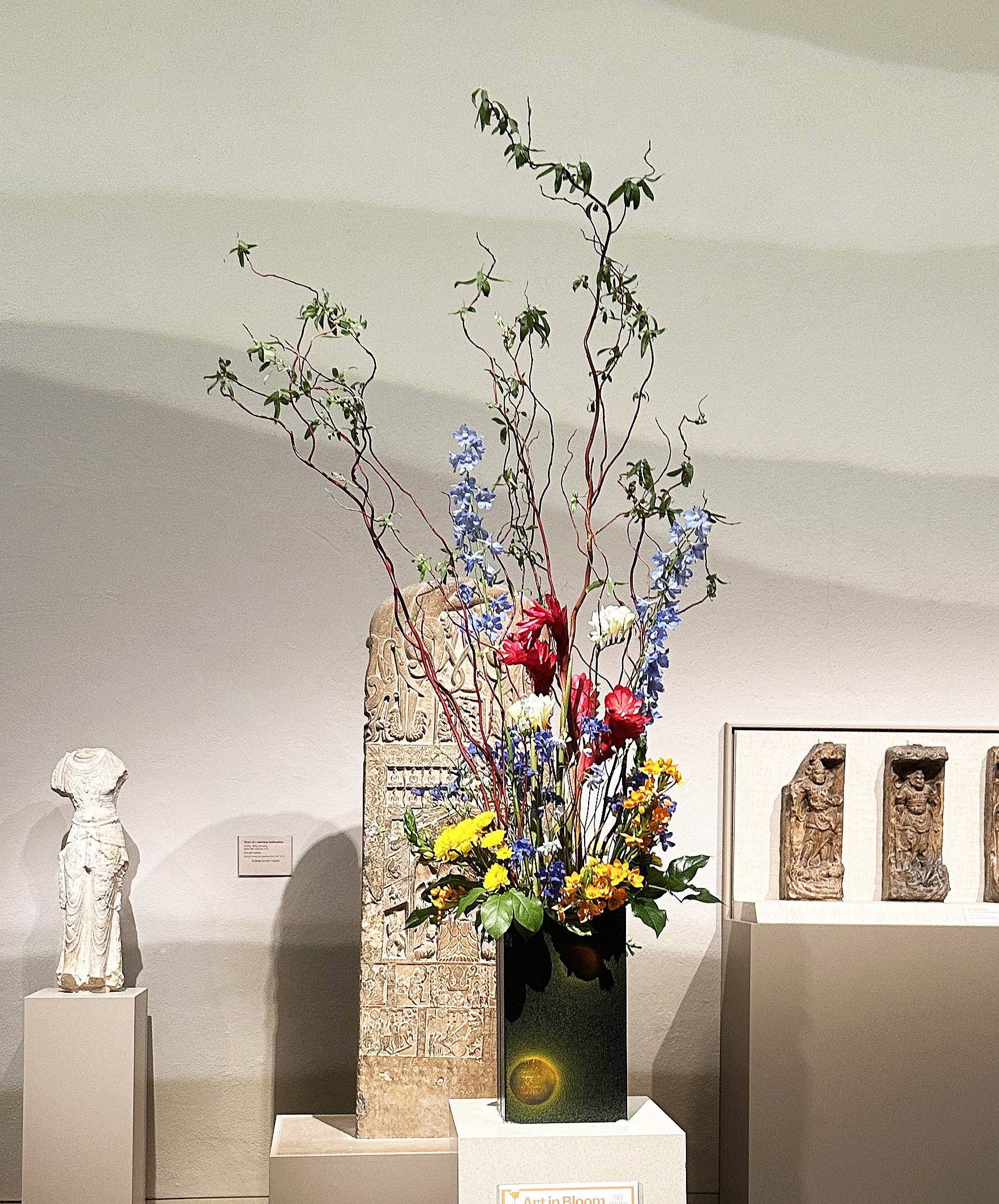
The stele displays more of a concrete expression than an abstract one. Looking at the different sections of the stele starting from the top, we responded to the movement of the dragon in this first section. We chose to represent the dragon with curly willow branches. Interestingly, curly willow is Unryuu Yanagi in Japanese, which means “Willow of Cloud and Dragon.” The next section is the harmonious world around the Buddha and the passionate, quiet prayers of the people offering their prayers to the Buddha. We tried to imagine beyond the objects’ current color to the vivid colors that were used in this period. We were aware that these colors were reminiscent of heaven.
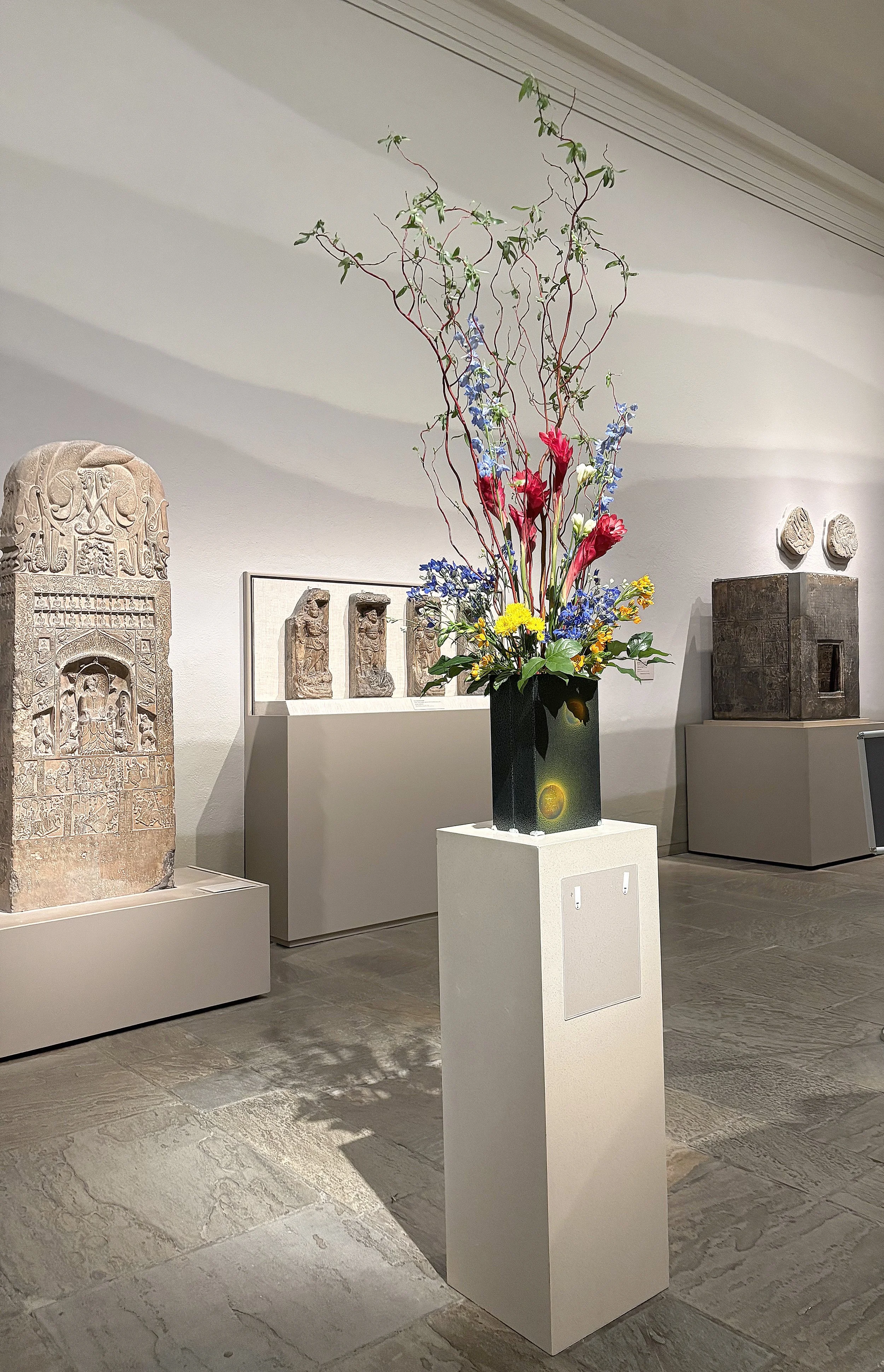
Therefore, the holy water that the dragon is said to have sprinkled at the time of the Buddha’s birth suggests blue or light blue flowers. In the middle, representing the Buddha and the surrounding Buddhas and celestial maidens, are large red flowers and other flowers. The orange/saffron color in the arrangement is an acknowledgement of India, where the Buddhist faith originated. In the lower part of the arrangement, large leaves and flowers represent the donors. We approached the process by working in a top-down fashion, starting with the dragons and proceeding from there. Ikenobo arrangements are usually seen as a 180-degree design with only the front facing the viewer. Here, we did a 360-degree arrangement in a free style design that can be seen from all sides. We hope the end result expresses a passionate and quiet prayer.
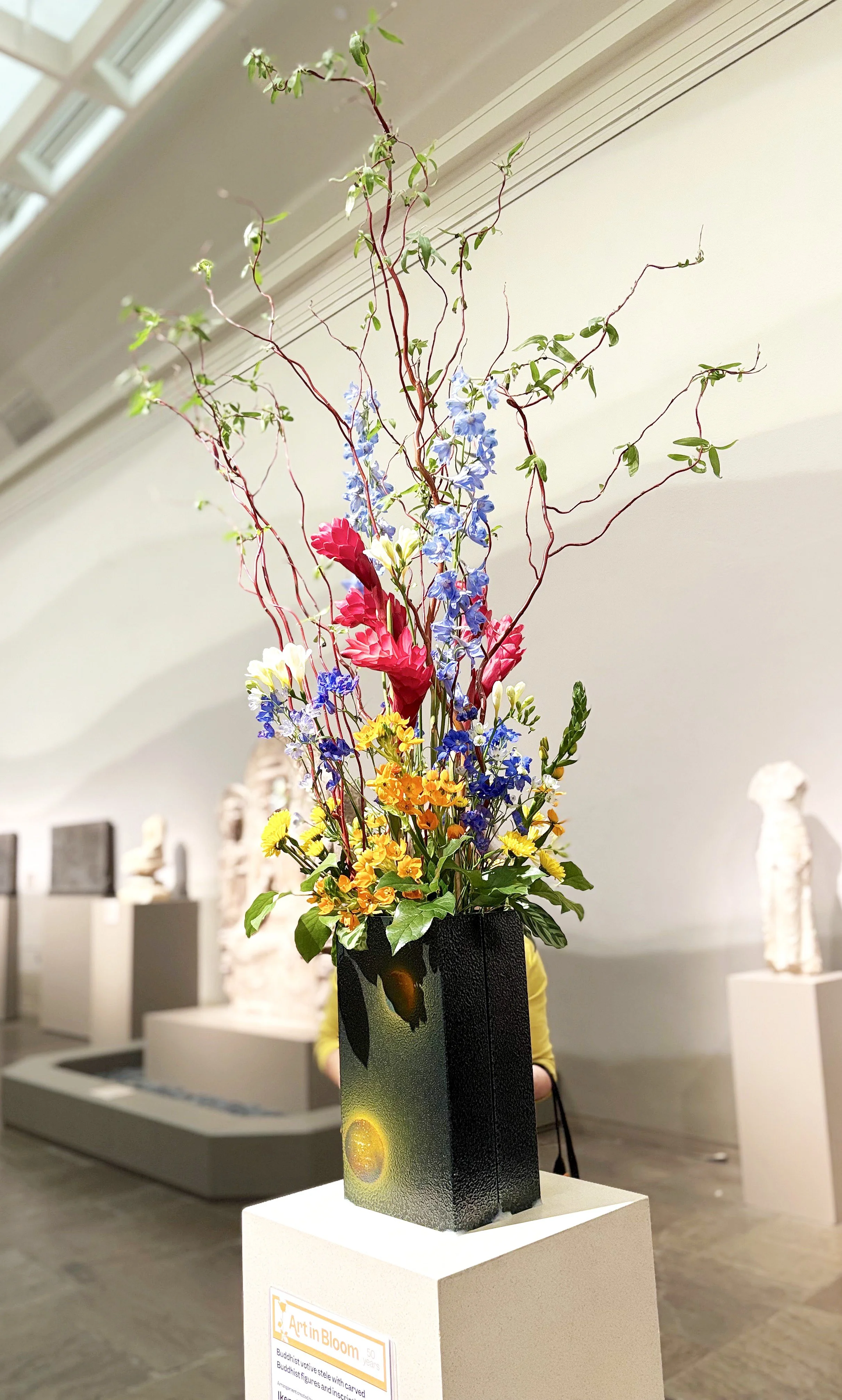
The Ikenobo Society of Boston has participated over the years in this wonderful event, and we are thrilled to be part of the 50th anniversary of Art in Bloom.